
Trade tariffs between the US and the EU? Rising tensions on the global market?
With import duties looming and a transatlantic trade partner rapidly shifting from “bestie” to “bully”, there’s a good chance we’ll soon be seeing ‘Buy Belgian!’ and ‘Made in Europe!’ cropping up everywhere. Not just as yet another marketing gimmick, but as an economic shift that might actually carry real weight – locally and internationally.
The ‘Made in Belgium’ label can be used fairly freely, but that doesn’t mean you can just slap it on anything—especially if you’re exporting. EU regulations define what truly qualifies as Belgian. If your product relies heavily on imported ingredients, be transparent about it and steer clear of misleading claims. Want to do it properly? The FOD Economy has a rather dry but very useful guide for businesses.
Many consumers are creatures of habit.
They’ve been buying the same American brand for years, and then a Belgian or European alternative pops up. It might taste a little different, or have a slightly different texture. In the past, that could’ve been a dealbreaker. But now that American goods are more expensive or falling out of favour, people are more willing to try something new.
Your job? Don’t apologise for the difference. Frame it as a plus:
“Our cola tastes different? Exactly—it’s made with real sugar instead of glucose-fructose syrup.”
“Our burgers aren’t like the big fast-food chains’? Correct—we use Belgian beef, not imported frozen patties.”
Across the globe, European production standards are often seen as more trustworthy than American ones.
Make that work for you.
Belgian and EU food products usually face stricter rules on food safety, contain fewer additives, and put more focus on sustainability. Highlight that, especially in export markets.
‘Made in Belgium’ won’t cut it as a hollow marketing line. But a strong story about origin, craftsmanship, and tradition? That sells. Look at how French cheese, Italian pasta or Spanish ham are positioned worldwide.
Belgium has a food culture that’s just as rich—use it to your advantage.
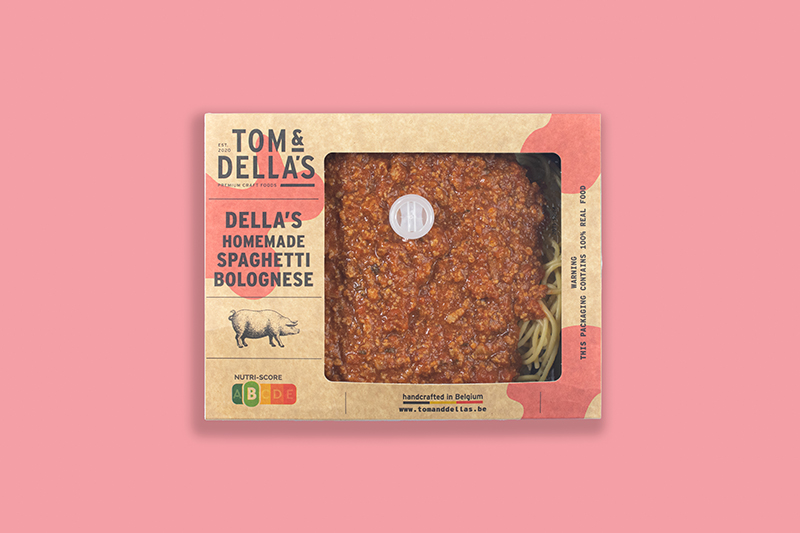
And it doesn’t always have to be ‘Belgium’. For Tom & Della’s, I once designed packaging with the slogan: “Made in 9duust!” Perfect – until production moved to postcode 9810. Then it became “Handcrafted in Belgium” (see image).
Want to go beyond ‘Belgian origin’ and directly compare your product to a US competitor? You can, but there are strict rules under article VI.17 of the Belgian Code of Economic Law, and various EU directives (like Directive 2006/114/EC).
You can say your Belgian soft drink contains less sugar than a well-known American brand, as long as you back it up with clear data.
You can share test results showing consumers prefer your chips to those from a fast-food chain—just make sure the method is transparent.
Want to be sure your campaign ticks all the legal boxes?
Get legal advice or have the FOD Economy review it.
The “buy local” trend is real. And ‘Made in Belgium’ can boost sales—but only if you are smart and sincere when you’re using it.
Belgians will buy Belgian when it’s a strong alternative. International customers will value the label when it signals quality and authenticity.